
30 Years of Buy-to-Let: From Innovation to Evolution
Thirty years of buy-to-let mortgages have reshaped the UK rental market. Their launch in late September 1996 addressed a pressing problem. Rental demand was climbing sharply while available stock struggled to keep pace. The barrier? Homeowners couldn't legally sublet on residential mortgages, and commercial lending offered only restrictive ten-year terms with punishing interest rates. The sector's investment potential remained largely untapped.
Then lenders introduced mortgages designed specifically for landlord investors, marking the first time individuals, not just companies, could secure financing based on a property's rental income potential rather than solely their personal financial circumstances.
The landscape changed again from 2015 when George Osborne, then chancellor, introduced sweeping changes. The government scaled back individual landlords' ability to deduct mortgage interest from their taxes and over time introduced more punitive levels of stamp duty targeting landlords.
Since buy-to-let mortgages were introduced in 1996, the number of households renting privately across England has risen by more than 150 per cent – equivalent to an additional 277 private rented homes per day. Higher mortgage rates and affordability pressures in the sales market have almost meant that renters are staying in rented homes for longer, exacerbating demand in a sector already under pressure.
How the Renters' Rights Act Is Reshaping London's Market
Nearly five months on from the implementation of the Renters' Rights Act, JLL's Residential Rental Index—which monitors pricing trends and agent perspectives across Finsbury Park, Wood Green, Nine Elms, City, Canary Wharf, Greenwich, Stratford and Kew—reveals a market in good health.
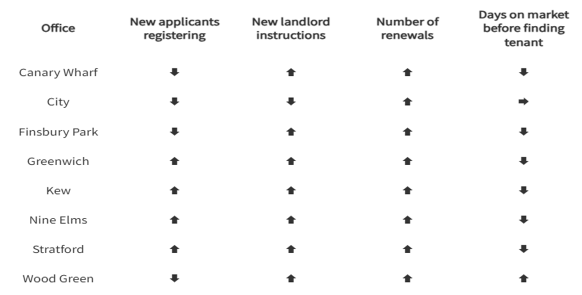
While 75% of residential offices reported a rise in landlord instructions over the past year, new applicant registrations also climbed in half of JLL's tracked locations. Strong demand, particularly during Q3, has meant that 75% of our residential offices have reported a decrease in the number of days properties are spending on the market.
Summer months often command rental premiums however, a couple of factors have underpinned strong growth this quarter. Heightened student demand has been driven by higher university intake and overseas arrivals. Meanwhile, the Renter's Rights Act means that tenants able to hand notice on contracts, which previously may not have ended until later in the year, has meant stock has let earlier than usual, leaving dwindling supplies come the busy summer period.
Figure 1: Market Sentiments-3 Months
Rents Hit 11-Quarter High
JLL's residential offices posted some of their strongest quarterly rental growth figures during Q3 2026, with average rents climbing 2.7% - the highest increase we've seen in 11 consecutive quarters. But this headline figure masks a more complex story of how the trends are quietly reshaping market dynamics across the capital.
Figure 2: Q3 Growth
Quarterly growth varied across locations, ranging from 1% to 4.4%. The City led the charge with the highest quarterly increase at 4.4%, followed by Stratford at 3.7% and Nine Elms at 3.3%. Meanwhile, Canary Wharf saw rental growth rebound from -2.1% last quarter to 2.3% this quarter.
Year-on-year growth hit 4% in Q3 - the best performance in seven consecutive quarters and double last quarter's 2%. Annual growth ranged from 1.4% to an impressive 8.3%. Greenwich topped the list with sub-markets recording growth of 5% or more, followed by City and Nine Elms.
Behind these numbers, the Renters' Rights Act has influenced higher asking rents, particularly in areas like Greenwich. Because the new legislation bans offers in excess of asking price, landlords are setting asking prices higher. This, coupled with the usual seasonal uptick in activity and a rise in the number of students looking for homes to rent has supported strong rental growth this quarter.
The new legislation has also influenced levels of available stock. While some tenants used break clauses to move earlier in the year when demand was quieter, the market experienced a notable shift in inventory patterns. The classic supply squeeze, coupled with rising demand across summer, has put upward pressure on rents. Despite these seasonal pressures, the market is adjusting to the new regulatory framework, with landlords adjusting their strategies to maintain portfolio performance.